
10 Hidden Gems of Italy: Following the Paths of Saints and Miracles

Italy is a treasure trove of Catholic history, yet many of its most significant spiritual sites remain in the shadow of large, well-known cities. While Rome and Assisi are the foundation of every pilgrimage, there are sanctuaries whose history and miracles deserve the special attention of every believer.
As a pilgrimage agency, we frequently receive inquiries about destinations that offer deeper peace and a direct encounter with authentic spirituality, away from the usual tourist routes. The goal of this blog is to introduce you to ten special places that, through their importance, preserved relics, and enduring traditions, represent the very heart of Christian heritage in Italy.
Whether it is the venerated bodies of saints, Eucharistic miracles, or sacred sites that have inspired generations of believers, these destinations offer an opportunity for profound personal renewal. Read on to discover what makes each of these places unique and why they should be on your wish list for your next pilgrimage.
1. Cascia: An Encounter with the Saint of the Impossible
Nestled in the beautiful mountainous region of Umbria, Cascia is a spiritual sanctuary that has offered solace for centuries to those seeking the intercession of Saint Rita. For pilgrims, Cascia is a place where a woman's life story meets signs of faith that continue to draw visitors from around the world.
The Life Path of Saint Rita: From Family Life to Monastic Enclosure
Saint Rita (1381-1457), widely known as the Saint of the Impossible, is one of the few saints who lived through all states of life, making her incredibly relatable:
Wife and Mother: She spent years in a marriage marked by trials, witnessing to her faith through patience and strength.
Widow: After the loss of her husband and sons, Rita answered a lifelong calling to enter the monastery.
Augustinian Nun: According to hagiography, she was admitted to the Monastery of Saint Mary Magdalene in a miraculous manner, where she spent the remainder of her life in prayer and penance.
What Can Pilgrims See in Cascia?
The Basilica and the Venerated Body of Saint Rita: The primary destination is the Basilica, where the venerated body of Saint Rita rests in a glass sarcophagus. The faithful venerate this as a special sign of God's grace, and it remains the heart of devotion in Cascia.
The Relic of the Thorn: While praying before the crucifix, Rita received a stigma, a wound associated with a thorn from Christ's crown. Historical tradition records that she bore this mark on her forehead for about fifteen years, until her death, and the mark is said to remain visible today.
A Relic of a Eucharistic Event: In the lower basilica (the crypt), a significant relic is preserved. According to local tradition, a priest once placed a consecrated Host between the pages of his prayer book, after which the parchment became stained with blood. It is believed that these stains resemble the contours of a human face.
The Monastery and the Rose Garden: Visitors can tour the monastery where she lived and see the rose garden, a reminder of the rose that reportedly bloomed in the snow toward the end of her life. Because of this, roses are blessed worldwide every year on her feast day (May 22) as a symbol of hope.

2. Lanciano: The Living Heart of a Millennium-Old Miracle
Located in the Abruzzo region, the ancient town of Lanciano holds a special place in the hearts of pilgrims. It is home to one of the oldest recorded Eucharistic miracles in the Catholic Church, a site that invites visitors to witness a mystery preserved for over twelve centuries.
The Story of the Miracle: Faith Overcoming Doubt
The origins of this sanctuary date back to the 8th century in the small Church of St. Legontian. According to Church tradition, a Basilian monk was celebrating Mass while struggling with deep doubts about the Real Presence of Christ in the Eucharist. At the moment of consecration, the Host is said to have turned into visible flesh and the wine into visible blood.
For the people of Lanciano and the pilgrims who followed, this was not just a historical event, but a lasting sign that transformed the town into a major center of pilgrimage.
Scientific Studies: The Findings of the 1970s
What makes Lanciano unique among ancient traditions is that it underwent a series of scientific examinations in 1970–1971. These studies were led by Odoardo Linoli, a professor of anatomy and pathological histology:
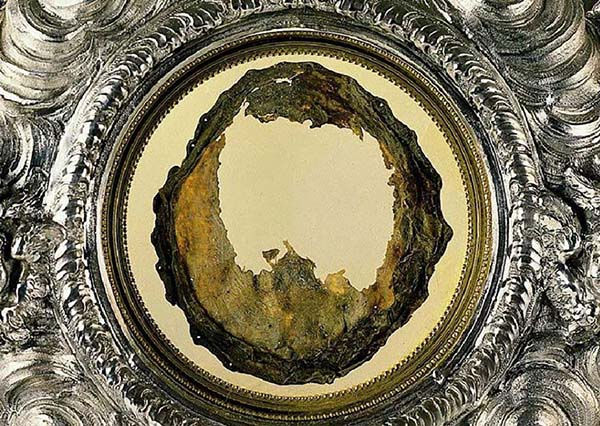
The Nature of the Tissue: The analysis indicated that the tissue corresponds to striated muscular tissue of the myocardium, which forms the muscular wall of the heart.
Blood Type: The blood was found to be human, belonging to the AB blood group, also noted in other religious relics such as the Shroud of Turin.
Natural Preservation: Despite the passage of twelve centuries, no traces of preservatives were found to be present in the samples analyzed.
What Do Pilgrims See Today?
Today, the relics are kept in the Sanctuary of the Eucharistic Miracle, placed in a magnificent silver monstrance. The flesh is displayed in a circular glass case, while the blood, which has coagulated into five irregular globules, is preserved in a crystal chalice at the base.
Entering the sanctuary, visitors are struck by the silence and the weight of history. Whether viewed through the lens of science or spirituality, Lanciano remains a powerful testimony of faith, standing as a bridge between ancient tradition and modern reflection.
3. San Giovanni Rotondo: In the Embrace of Saint Padre Pio
Located on the Gargano Peninsula in the Puglia region, San Giovanni Rotondo is a place that bears witness to the extraordinary life and service of Saint Padre Pio of Pietrelcina. This humble Capuchin friar spent half a century here, transforming a once-isolated town into a global center of prayer and mercy.
A Life Marked by the Wounds of Christ
Padre Pio (1887-1968) remains one of the most famous stigmatists of the modern era. He bore the stigmata — visible wounds of Christ on his hands, feet, and side — for approximately fifty years (1918-1968). These wounds were the subject of numerous medical examinations and observations during his lifetime. Notably, the wounds are reported to have disappeared without visible scarring shortly before his death.
Apostle of the Confessional
Padre Pio was renowned for a remarkable spiritual insight into the human soul. Pilgrims would wait for hours, sometimes days, to confess to him. It is reported that he spent up to 15 hours a day in the confessional, reconciling souls with God and providing spiritual guidance that transformed countless lives.
What do Pilgrims See Today?
The New and Old Basilica: Today, pilgrims can visit the monumental new Basilica of Saint Padre Pio, designed by the renowned architect Renzo Piano. In its crypt, the body of Saint Padre Pio rests and is venerated by the faithful. However, many find a special peace in the old church and the monastery where the saint celebrated Mass for decades.
The Monastery Cell and the Crucifix: Visitors can see the humble cell where Padre Pio lived, as well as the crucifix before which he received the stigmata in 1918. These spaces remain largely unchanged, preserving the simplicity of the Franciscan spirit.
Home for the Relief of Suffering (Casa Sollievo della Sofferenza): Padre Pio was also a man of action. His greatest earthly project was the creation of one of the most advanced hospitals of its time, built entirely through the donations of the faithful. It still stands today as a symbol of his profound love for the sick.
Spiritual Significance
San Giovanni Rotondo is a place of encounter with suffering transformed into love. For pilgrims, being here is a call to persistent prayer. As the saint himself often said: "Pray, hope, and don't worry."

4. Monte Sant'Angelo: The Celestial Basilica of Archangel Michael
Just twenty kilometers from San Giovanni Rotondo, on the steep cliffs of Mount Gargano, lies Monte Sant'Angelo. This cave sanctuary is one of the most significant sites of veneration for Archangel Michael in Europe and is designated as a UNESCO World Heritage site.
A Sanctuary Not Consecrated by Human Hands
According to Church tradition, Archangel Michael appeared at this site several times. The most well-known appearance is said to have occurred in 493 AD, when the local bishop intended to consecrate the cave, but the Archangel reportedly informed him that he himself had already consecrated the site with his presence. For this reason, the sanctuary is traditionally considered the only one in the world not consecrated by human hands, earning it the title Celeste Basilica (Celestial Basilica).
What Do Pilgrims See Today?
Entering the Mystical Cave: The pilgrimage begins by descending a long stone staircase from the 13th century that leads deep into the mountain. Entering the cave itself, which serves as a church, leaves a powerful impression due to the raw rock formations combined with sacred art.
Statue of Archangel Michael: In the heart of the cave stands a beautiful marble statue of Archangel Michael from the 16th century, depicting the leader of the heavenly host defeating evil.
The Footprint in the Stone: Inside the cave, pilgrims can see a stone which, according to tradition, is believed to bear the imprint of Archangel Michael’s footprint, left as a sign of his protection and enduring presence on Mount Gargano.
The Bronze Doors: At the entrance to the cave are magnificent bronze doors from the 11th century, crafted in Constantinople. They depict biblical scenes and the various appearances of the Archangel throughout history.
Spiritual Significance
Throughout history, Monte Sant'Angelo has been an essential stop for numerous popes, kings, and saints, including St. Francis of Assisi and St. Padre Pio. Padre Pio is said to have often directed the faithful to this cave first, saying: "Before you come to me, go to Archangel Michael."
For the pilgrim, this is a place of silence and spiritual fortitude. It is a space to pray for protection and inner peace, with a deep sense of the presence of the one whose name carries an eternal message: "Who is like God?"
5. Loreto: The Holy House Where Mary Said "Yes"
Perched on a hill overlooking the Adriatic Sea, the town of Loreto is home to one of the most important Marian shrines in the world. In the center of its grand Basilica stands a humble stone structure known as the Holy House (Santa Casa).
History of the Translation: From Nazareth to Italy
According to Church tradition, these walls are believed to be from the house in Nazareth where the Blessed Virgin Mary lived and where the Annunciation took place.
The Transfer of the Relic: Historical records and some archaeological studies suggest that the walls were transported from the Holy Land at the end of the 13th century. While pious tradition mentions angels carrying the house, certain historical documents suggest that the noble Angeli family may have played a key role in saving the relic during the Crusades.

What Do Pilgrims See Today?
The Holy House (Santa Casa): Inside the Basilica sits the modest structure made of dark stone. Archaeological studies have suggested strong similarities between these stones and the building techniques used in 1st-century Nazareth. Furthermore, the foundations remaining in Nazareth are said to correspond to the dimensions of the walls in Loreto.
Ancient Markings: Graffiti and symbols, which have been identified by some researchers as similar to early Christian markings found in the Holy Land, can be seen on the stones.
Statue of Our Lady of Loreto (The Black Madonna): Inside the Holy House is the iconic statue of the Mother of God with the Child Jesus. The current statue is a replica of the original cedar wood image destroyed in a fire in 1921. Loreto is widely recognized as a site of profound Marian devotion because of this sacred image.
The Pilgrims' Steps: Around the marble screen that surrounds the Holy House are steps that pilgrims often ascend on their knees. Over the centuries, the devotion of countless pilgrims has left visible marks in the marble, serving as a powerful testament to faith and perseverance.
Spiritual Significance
Loreto is a place that celebrates the Incarnation and the family. Pope John Paul II called Loreto "the first temple, the first church where Mary became the first tabernacle." For every traveler, entering these walls brings a profound sense of home and closeness to Jesus, Mary, and Joseph.
6. Manoppello: The Mysterious Face on the Veil
In the quiet Capuchin monastery of Manoppello, a relic known as the Volto Santo (Holy Face) is preserved. It is a thin, transparent veil featuring the image of Jesus Christ, which has long intrigued researchers and pilgrims alike.
The Mystery of the Image
The Veil of Manoppello is unique due to its physical properties, which are difficult to explain using known techniques:
The Fabric: Some studies have suggested that the veil may be made of byssus (sea silk), a rare and precious material from antiquity. Given the nature of this fabric, it is exceptionally difficult to paint on, as the fibers do not absorb pigments in the usual way.
An Elusive Depiction: No clearly identifiable traces of paint or ink have been definitively confirmed on the veil. The image is visible from both sides, and notably, it appears to become clearer as light passes through it, with the facial expression seeming to shift depending on the viewing angle.
Connection to the Shroud of Turin
Some research has suggested that the facial features on the Manoppello Veil show significant similarities to those on the Shroud of Turin. According to some researchers and believers, the Shroud and the Veil may be two relics that were present in the tomb of Jesus, witnessing different moments of the Passion and Resurrection.
What Do Pilgrims See Today?
In the Santuario del Volto Santo, the veil is displayed in a silver reliquary above the main altar.
An "Eye-to-Eye" Encounter: Unlike many depictions of the Passion, Jesus' eyes are open on this veil. Pilgrims often describe standing before this image as a deeply personal and gentle encounter.
Transparency: When viewed with backlight, the relic becomes almost transparent, further highlighting the mysterious nature of the image.
Spiritual Significance
The visit of Pope Benedict XVI in 2006 brought global attention to this humble shrine. Manoppello is a place that invites the pilgrim to "seek the Face of the Lord" in silence. For the traveler, it is an opportunity to meditate on a God who approached us with a human face and a gaze full of mercy.

7. Subiaco: The Cradle of Western Monasticism and the Peace of Saint Benedict
Perched on the rugged cliffs above the Aniene Valley, Subiaco is where Saint Benedict, one of the patron saints of Europe, lived in solitude for several years. It is here that the spiritual foundations of the Benedictine Order began to take shape, under the well-known motto Ora et labora (Pray and work).
Sacro Speco: A Sanctuary Carved into the Rock
The main destination for pilgrims is the monastery of Sacro Speco (The Holy Cave), built directly into the rock of a steep cliff. At its heart lies the cave where Saint Benedict lived as a hermit, seeking God in silence and prayer.
What Can Pilgrims See in Subiaco?
Frescoes and Sacred Art: The monastery is richly decorated with frescoes dating from the 13th to the 15th century. One of its most remarkable features is one of the earliest known depictions of Saint Francis of Assisi, traditionally believed to have been painted during his lifetime.
Monastery of Saint Scholastica: Nearby stands the monastery dedicated to Saint Scholastica, the sister of Saint Benedict. It is one of the oldest Benedictine monasteries and reflects centuries of monastic tradition and architecture.
The Cave and the Garden: Visitors can descend into the cave itself and see the statue of the young Benedict in prayer, as well as the rose garden which tradition associates with the saint's victory over temptation.
Spiritual Significance
Subiaco is a place of deep silence and inner peace. It invites pilgrims to step away from the noise of everyday life and rediscover the balance between prayer and work. For the pilgrim, Subiaco is a reminder that great spiritual renewal often begins in hiddenness, simplicity, and a sincere search for God.

8. Padua: In the Silence of Saint Leopold Mandić's Confessional
In the shadow of Padua’s grand basilicas lies the Capuchin monastery where Saint Leopold Bogdan Mandić (1866–1942) spent most of his life. Born in Herceg Novi, this saint, small in stature but a spiritual giant, became one of the most remarkable apostles of mercy in modern history.
The Saint of Tireless Reconciliation
For nearly 40 years, Saint Leopold dedicated his life to serving the faithful. It is reported that he spent up to 10–12 hours a day in his humble confessional, reconciling souls with God.
The Desire for Unity: His lifelong mission was the unity of Christians, particularly between the East and the West, a cause for which he offered his daily sacrifices and prayers.
Testimony from World War II: In 1944, the monastery was heavily damaged during a bombing raid. According to testimonies, his small confessional is said to have remained untouched by the destruction, just as he is reported to have predicted: "Here, God has shown so much mercy that it must remain as a monument to His goodness."
What Do Pilgrims See Today?
The Tomb and Preserved Body: The shrine houses the tomb of Saint Leopold, where pilgrims place their petitions. His body has been preserved and is occasionally displayed for veneration, bearing witness to a holiness that transcends time.
The Humble Confessional: Pilgrims can enter the very room where Saint Leopold received the faithful for decades. It is a very small and simple space with a wooden chair and a crucifix. The atmosphere still radiates a sense of peace, recalling the countless moments of spiritual renewal that took place within its walls.
The Croatian Heritage: As Saint Leopold was born in the Bay of Kotor and retained a strong connection to his Croatian roots, the shrine includes a hall with information and artifacts connecting the saint to his homeland.
Spiritual Significance
Saint Leopold teaches us that physical fragility is no barrier to great acts of love. He is a saint who understands human weakness and patiently listens to every individual. For every pilgrim, a visit to this shrine is an opportunity for inner peace and a reminder that God’s mercy is always greater than our failures.

9. Bolsena: The Source of the Feast of Corpus Christi

The small town of Bolsena, located along the shores of Lake Bolsena, preserves the memory of an event from 1263 that had a lasting impact on the Church’s liturgical life. It is a place where doubt turned into testimony and faith received a visible sign.
The Eucharistic Miracle that Changed History
According to Church tradition, the history of the feast of Corpus Christi is closely connected to both a mystical vision and a physical miracle. While the spiritual movement began in Belgium with the visions of Saint Juliana of Liège, it was the miracle in Bolsena that served as a powerful confirmation for the Church.
The Event at St. Christina’s: In 1263, a Bohemian priest named Peter of Prague was on a pilgrimage to Rome, struggling with doubts regarding the Real Presence of Jesus in the Eucharist. While celebrating Holy Mass in Bolsena, at the moment of Consecration, the Host is said to have begun to bleed, staining the altar cloth (the corporal) and the marble floor.
The Institution of the Feast: Pope Urban IV, who was residing in nearby Orvieto and was already familiar with Saint Juliana’s visions, recognized this as a divine sign. He ordered an investigation and later extended the Feast of Corpus Christi to the entire Church in 1264.
What Do Pilgrims See Today?
The Basilica of Saint Christina: This Romanesque church houses the Chapel of the Miracle, where pilgrims can see the marble slabs believed to bear the marks of the blood.
The Connection to Orvieto: While the miracle occurred in Bolsena, the stained corporal is preserved in the magnificent Cathedral of Orvieto, which was built to be a worthy reliquary for this sacred object.
The Legacy of St. Thomas Aquinas: In connection with this feast, St. Thomas Aquinas composed the liturgical texts and hymns we still use today, such as Adoro Te Devote (Klanjam ti se smjerno). Despite his brilliant work, he famously remarked near the end of his life that all his writings felt like "straw" compared to the reality of the Eucharist.
Spiritual Significance
Bolsena invites pilgrims to renew their faith in the Eucharist. The story reflects the struggles many experience in their faith journey, serving as a reminder that God often responds to sincere searching. For every traveler, this is a place that speaks of the living presence of Christ, connecting a quiet Italian town to a global tradition of devotion.
10. Osimo: The City of the "Flying Saint" and Patron of Students

In the peaceful and picturesque town of Osimo lies the Basilica dedicated to Saint Joseph of Cupertino (1603–1663). This saint, known for his childlike simplicity, has become especially dear to pilgrims, particularly young people preparing for important life challenges.
A Saint Known for Extraordinary Mystical Phenomena
Saint Joseph of Cupertino is remembered for his extraordinary mystical experiences, including reported instances of levitation.
Mystical Ecstasy: According to numerous testimonies, including Church authorities and other witnesses of his time, Joseph would fall into states of ecstasy during prayer. Because of these accounts, he became widely known as the “Flying Saint.”
Patron of Students: Joseph faced great difficulties in his studies, yet through faith and perseverance, he was ordained a priest. Today, students around the world invoke his intercession, seeing in him someone who understands their struggles and anxieties.
What Do Pilgrims See Today?
The Basilica and the Saint's Tomb: In the crypt of the Basilica, the body of Saint Joseph rests in a glass sarcophagus. It is a place of quiet prayer, where many young people leave notes, exam papers, or written intentions, entrusting their future to his intercession.
The Rooms Where He Lived: Pilgrims can visit the rooms in the friary where the saint spent the final years of his life. These simple spaces preserve elements of his daily life and reflect the profound humility he lived by.
Spiritual Significance
Saint Joseph of Cupertino reminds us that in God’s eyes, the heart and sincerity matter more than intellect or status. His life offers hope to all who feel inadequate or overlooked. For the pilgrim, Osimo becomes a place of encouragement, showing that true faith has the power to lift us above the challenges of everyday life.
Italy is a land where history and eternity meet on every corner. From the quiet cave in Subiaco to the magnificent basilicas of Padua and Loreto, these ten sites offer more than just a glimpse into the past. They are living testimonies of faith that continue to inspire and transform those who visit them today.
Whether you are drawn by the mystery of the Eucharistic miracles, the extraordinary lives of the saints, or the profound silence of ancient sanctuaries, each of these stops is an opportunity for personal renewal. As you walk these paths, you are not just a tourist, but a pilgrim following in the footsteps of millions who, for centuries, have sought peace, protection, and a deeper connection to the divine.
These ten sanctuaries are just a few of the many magnificent gems Italy has to offer. Each city and every hidden chapel holds its own story, waiting to be discovered by those with a seeking heart.
We invite you to step away from the familiar and explore these special places. In their presence, you may find that the greatest miracle of all is the one that happens within the heart of the traveler.


Comments